
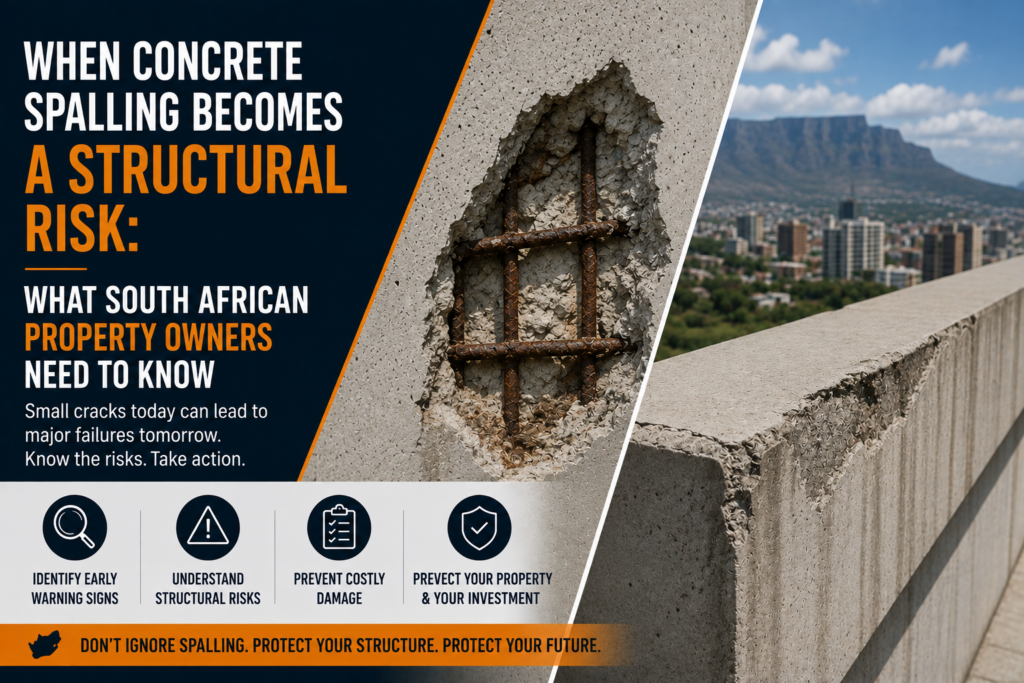
Concrete spalling is often underestimated—but in many cases, it signals serious structural risk. For property owners and asset managers in South Africa, understanding when to act is critical for safety, compliance, and liability management.
How Spalling Impacts Structural Integrity
Loss of Steel-Concrete Bond
Spalling weakens the bond between reinforcement and concrete, reducing structural efficiency.
Reduction in Reinforcement Capacity
Corrosion reduces steel diameter, directly impacting load-bearing capacity.
Accelerated Deterioration
Once spalling begins, it creates pathways for further moisture and contaminant ingress, accelerating damage.
High-Risk Situations
Immediate intervention is required when:
- Spalling occurs in beams, columns, or slabs
- Reinforcement is exposed and visibly corroded
- Large sections of concrete have detached
- Cracking is spreading or widening
Safety and Legal Implications in South Africa
Under the National Building Regulations and Building Standards Act, property owners are responsible for maintaining structures in a safe condition.
Failure to act can result in:
- Safety hazards to occupants and the public
- Legal liability for injury or damage
- Insurance claim complications
- Devaluation of property assets
When to Engage a Specialist
Professional assessment is essential when:
- Damage is extensive or recurring
- Structural elements are affected
- The cause of deterioration is unclear
A qualified specialist will provide:
- Condition assessments
- Repair specifications
- Compliance with SANS standards
Conclusion
Concrete spalling should never be ignored—especially when structural elements are involved. Acting early protects safety, ensures compliance, and avoids significantly higher repair costs in the future.
References
- National Building Regulations (South Africa)
- SANS 10100: Structural Use of Concrete
- ISO 13822: Assessment of Existing Structures
- Cement & Concrete SA Publications
- CSIR Infrastructure Studies