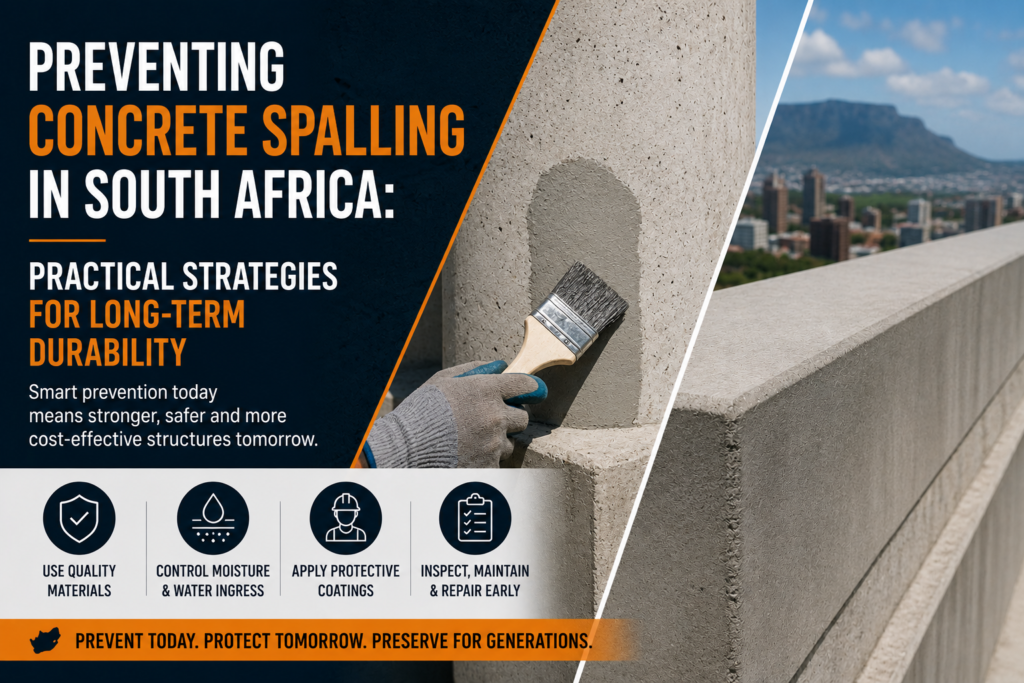
Preventing concrete spalling is significantly more cost-effective than repairing it. In South Africa—where environmental exposure ranges from high carbonation inland to aggressive chloride environments along the coast—a proactive approach is essential.
Design-Stage Considerations
Adequate Concrete Cover
Concrete cover requirements are set out in SANS 10100 (structural use of concrete), and sufficient cover is what protects reinforcement from environmental exposure.
Durable Concrete Mix Design
A high-quality mix should:
- Minimise permeability
- Use supplementary cementitious materials (e.g., fly ash, slag)
- Maintain a low water-to-cement ratio
These measures slow down carbonation and chloride ingress.
Environmental Design Classification
Structures should be designed according to exposure conditions:
- Inland urban (carbonation risk)
- Coastal (chloride exposure)
- Industrial (chemical exposure)
Construction Best Practices
Proper Compaction and Placement
Eliminating voids is critical to preventing pathways for moisture and contaminants.
Effective Curing
Proper curing improves strength and durability, significantly reducing long-term deterioration.
Maintenance Strategies
Routine Inspections
Annual or biannual inspections help detect early signs of spalling and corrosion. Commercial and sectional-title buildings in KZN can start with a free Asset Protection Review.
Protective Coatings and Sealers
Applying anti-carbonation coatings or water repellents reduces moisture ingress.
Crack Repair
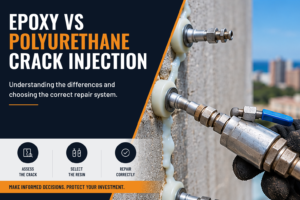
Sealing cracks early prevents water penetration and protects embedded steel.
Waterproofing and Drainage
Balconies, roofs, and parking decks should have properly maintained waterproofing systems.
Cost vs Risk: The Preventative Advantage
Preventative maintenance is generally cheaper over a structure’s life than reactive repair, because early intervention limits how much concrete has to be removed and reinstated.
Conclusion
In the South African context, preventing concrete spalling requires a lifecycle approach—combining smart design, quality construction, and ongoing maintenance. The result is longer-lasting structures, reduced risk, and lower long-term costs.
To arrange an inspection, call 082 091 7731 or see our concrete spalling repair services.
References
- SANS 2001-CC1: Concrete Works
- Cement & Concrete SA: Durability Guidelines
- fib Model Code for Concrete Structures (2010)
- The Concrete Institute (South Africa) Publications